
How Nicotine Fooled Freud & Us All
Tobacco’s Legacy of Systemically Exploiting Addiction Should Piss Us Off


Back in January, I wrote about fatphobia and the problem of insulin resistance or IR. I’ve been reading more about the relationship between chronic stress to IR and learned that nicotine use is another significant contributing factor. It doesn’t seem so far-fetched to me that our hyper-productivity culture creates chronic stress, and a diabetes epidemic is waiting to happen. Wait.
Am I being alarmist? As I’ve highlighted in a previous article, The CDC estimates that 38% of adults in the U.S. have pre-diabetes, a condition closely linked to IR. Another 11% already have diabetes, and without intervention it will only worsen as our population ages, as nearly half of those over 65 have IR. I also suggested, as others have, that obesity may be a (misogynistic) red herring and that insulin resistance might be a better indicator of health than body size, particularly in marginalized and otherwise vulnerable populations. You don’t have to be overweight to have insulin resistance. You can’t tell if someone has insulin resistance by looking at them. This is also reflected as a shift in focus in the weight management industry as more of a chronic medical issue. Nicotine may impair insulin sensitivity and disrupt glucose metabolism, which can contribute to the onset of diabetes. Additionally, nicotine can have direct effects on pancreatic function, further exacerbating insulin resistance.
While general tobacco use has declined over the past twenty years, smokeless nicotine delivery devices have not, likely in response to the well-studied dangers of smoked tobacco. In 2023, Juul Labs was ordered to pay $462 million to six states in its largest settlement ever after the FDA ordered the e-cigarette (vaping) maker to remove its products in 2022 and after thousands of personal injury lawsuits.
However, most people don’t associate chronic stress or nicotine dependence with diabetes. Nicotine delivery had been marketed as a way to reduce tobacco use which has a long relationship with chronic stress. The industry has perpetually discounted the risks of nicotine, promoting it as a less toxic half-measure to quit smoking tobacco. They’ve had to do this because of the dramatic reduction in smoking tobacco, the Juul decision, and tremendous loss in revenue. As a result, more children have been able to grow up in smoke-free homes while chronic stress remains a pervasive issue.
Tobacco & nicotine’s connection to mental health
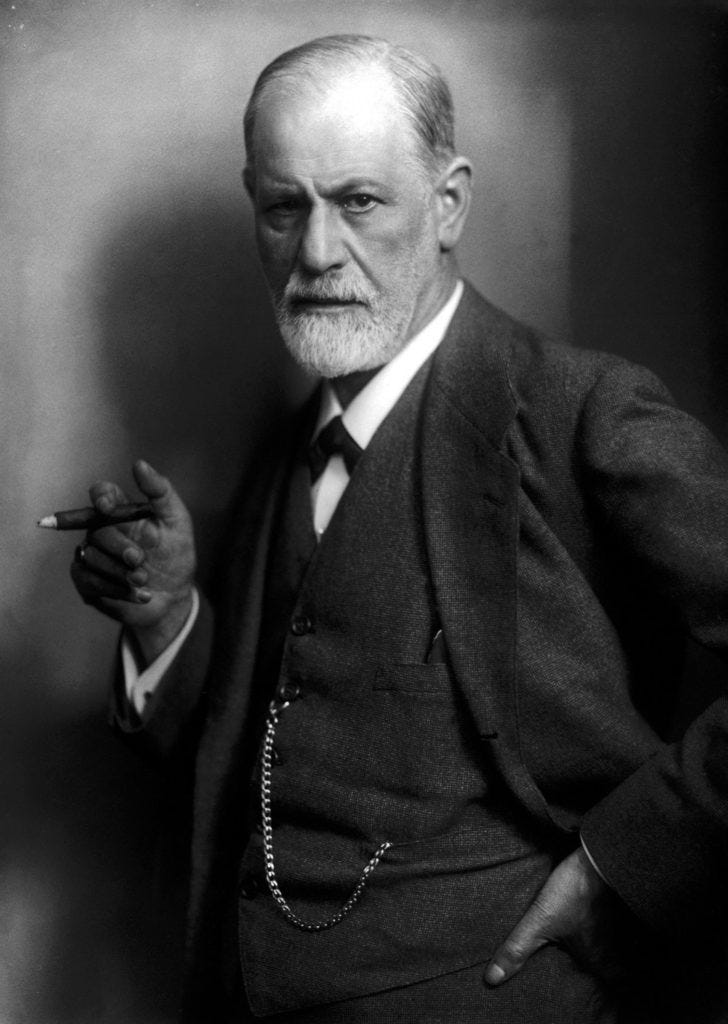
The insidious influence of tobacco extends beyond physical health, intertwining with mental health through historical ties to figures like Sigmund Freud, who suffered horribly from mouth cancer due to his infamous cigar use. Freud’s nephew Edward Bernays also had ties to tobacco —he was highly involved in the advertising industry in the late 1920s and was largely responsible for marketing cigarettes to women, encouraging them to hold up their lit cigarettes as torches of freedom and independence from patriarchal domination after only recently winning the basic right to vote. Of course, downtrodden women delighted in that. Who wouldn’t? Cigarettes were marketed using this same manipulative approach in the 1960s and 70s directly appealing to feminism with campaigns like “You’ve come a long way, baby.” They were expressions of power, and fashion statements. They were sophisticated and “cool”.
Sometimes a cigar is just a cigar & nicotine is addictive
Yet we still seem to be in denial of the addictive nature of nicotine. Only about 6% of people who want to quit smoking are actually able to quit. While it’s true that nicotine itself doesn’t cause cancer, which the tobacco industry will tout, they will not divulge the myriad health risks that nicotine increases. The news media continues to report that we don’t know the health risks of nicotine. That’s baloney.
Nicotine, chronic stress, diabetes & addiction
Research has identified a pathway, between the pancreas and a part of the brain active in nicotine intake, linking nicotine to the risk of developing Type 2 Diabetes, but “the full picture of nicotine’s role in diabetes is likely to involve much more than a single regulatory circuit.”
Nicotine marketers know the addictive quality, even as several CEOs of major tobacco companies denied that fact in front of Congress. (Here’s a video of that, if you haven’t seen it.) How do marketers get around these glaring facts? Well, one way is to make their products appealing to the youngest consumers they can legally target with introductory gimmicks at lower cost and offering candy-like flavors in order to build their markets. So, children and adolescents are surreptitiously introduced to the “coolness” of smokeless tobacco. When children see older teens and younger adults having fun using these products, kids are more likely to imitate older peers as examples of normative behavior. Personally, I recall looking up to a teenager simply because they were older and had more privileges. That’s called scaffolding and it’s a way humans grow and develop.
Newer nicotine products are now being promoted freely by young internet influencers as a fun way to get a buzz, not unlike caffeinated soft drinks. They have been called Zynfluencers, after a brand of smokeless tobacco derivatives, and it’s all legal even if in an ethically gray area. It’s been called a form of limbic capitalism —not only does this type of marketing appeal to primitive parts of our psyche, it literally hooks us by offering an addictive substance at a fraction of the cost, and then gradually ties us to it neurochemically to the point of dependence. (Fast food, gambling, and gaming work using this marketing model.)
But what about free speech and free choice?
Amidst debates over free speech and choice, safeguarding children from predatory marketing remains paramount. Platforms can incentivize responsible content creation and media literacy, empowering users to discern and value ethical content over impulsive clicks. While legality shields these influencers, platforms bear a vital responsibility in curbing their reach.
As the risks of nicotine are downplayed by the tobacco/nicotine industry, most responsible adults would agree that products with nicotine are not healthy for children and wouldn’t want their children to use them.
We know that in childhood and pre-adolescence, we only gradually develop the skills to make well-informed decisions, and children cannot give consent to adult-like behaviors.
It’s clear that the ties between tobacco, nicotine, and society are deep-rooted, from figures like Freud to new influencer marketing on the internet. With diabetes and addiction rising, especially among those already facing challenges, we can't ignore Big Tobacco. While we debate about free speech and personal choice, let's remember to support children and adolescents. We need to give them the tools to see through the smoke and mirrors of influencers and make smart choices. By boosting media smarts and rewarding responsible content, we can help them resist the allure of nicotine. As a caring community, we can prioritize the health and safety of our most vulnerable members, ensuring they can grow in a world where their, and our, well-being comes before profit.
Resources:
Chronic Stress & Insulin Resistance
The Age of Addiction: How Bad Habits Became Big Business, David T. Courtwright
The Relationship Between Fast Food & Diabetes (its complicated)
The Explosive Geopolitics of Disposable Vapes
Who Will Survive the ‘Zynpocalypse’?
You can read more about how these and other related issues impacted my own family in my memoir, My Mother’s Ghosts, available for free here at Substack .
I’ve had drinking friends say that same thing to me: “I don’t trust someone who won’t have a beer with me”
Is it really the tobacco industry or the alcohol industry or the pharma industry’s fault that we’re addicted to our coping mechanisms? Have they exacerbated an already mindless and dis-eased public? Sure. But ultimately it comes down to the individual to make the choice to live a substance-free life—whether by abstinence or intervention or treatment.
Thanks Dee, but I think you’ve missed the point of culturally embedded addictions. We should not miss the forest for the trees. We’ve fallen for P.T. Barnum bamboozling if we think it’s only about individual will power. We should know better.