
Broken Promises
The Erosion of the Social Contract

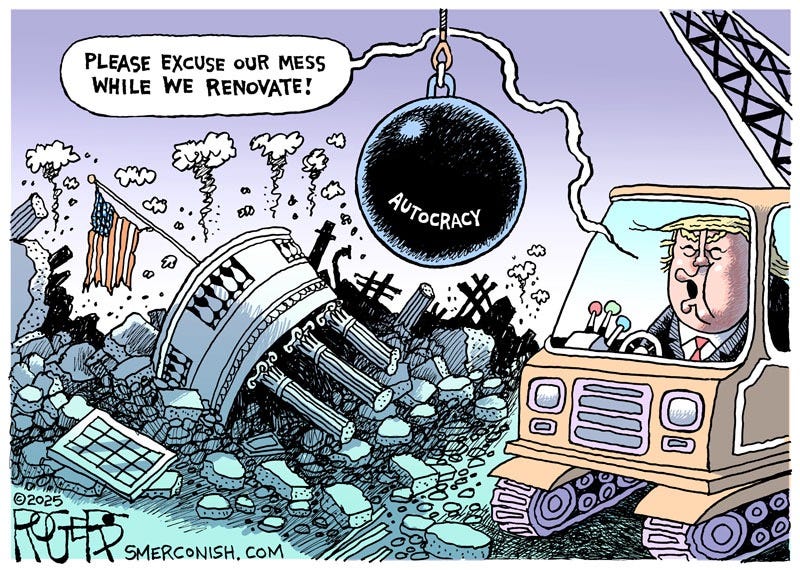
The government shutdown, when used as a political tool, often appears in news cycles as a sterile discussion of budget numbers, continuing resolutions, and legislative maneuvering. However, viewed through the clinical lens of a psychotherapist, the crisis immediately transforms into a study of systemic trauma, betrayal, and profound relational injury inflicted upon citizens.
When the refusal to fund the government is explicitly tied to the maintenance of tax cuts for the wealthiest, it creates a powerful and deeply damaging psychological dynamic: the intentional weaponization of collective distress to secure an elite financial objective.
The central conflict is not merely fiscal; it is relational. It represents a catastrophic violation of the fundamental social contract—the implicit covenant that a state will prioritize the basic stability and well-being of its people. When this agreement is breached for the sake of abstract financial gain for a privileged few, the emotional and psychological fallout is immediate and widespread, extending far beyond the immediate economic disruption.
The Constitution itself names this agreement explicitly: to ‘promote the general Welfare’ and ‘insure domestic Tranquility.’ These are not aspirational flourishes—they are the stated purposes for which the government of the United States exists. When political actors hold basic services hostage to preserve tax advantages for the wealthy, they don’t just violate an implicit social agreement; they betray the explicit constitutional mandate to prioritize the wellbeing of all citizens.
Systemic Anxiety & A Threat to Basic Needs
For millions of Americans dependent on federal functions—from SNAP recipients to beneficiaries of the Affordable Care Act (ACA)—the shutdown triggers a primitive state of alarm. Abraham Maslow’s hierarchy of needs is thrown into sharp relief: the immediate threat is to the most foundational levels—physiological needs (food security) and safety (healthcare and stable income).
The looming expiration of enhanced ACA subsidies, for instance, is experienced not as an accounting error, but as an existential threat. The potential for a sudden, massive increase in healthcare premiums plunges families into a state of chronic, generalized anxiety. This is not simply worry; it is a predictable, stress-induced cascade that impacts mental health, characterized by sleeplessness, irritability, and a feeling of impending doom. For the federal worker or contractor forced to work without pay (or furloughed entirely), this threat manifests as a fear of insolvency and the inability to provide for their children, mimicking the acute stress response seen in victims of natural disasters or other sudden, destabilizing events. The core psychological injury here is the realization that their stability is intentionally transactional, revocable at the whim of political actors seeking a different financial outcome.
Moral Injury & Betrayal
Perhaps the most insidious damage occurs at the level of moral and emotional processing, resulting in moral injury. Moral injury is the trauma that arises from perpetrating, witnessing, or failing to prevent acts that transgress deeply held moral beliefs. While typically discussed in military contexts, it applies perfectly here to citizens.
We witness clear violations of justice: the vital services designed to protect the most vulnerable are held hostage, while the financial comfort of the least vulnerable is protected at all costs. For citizens who pay taxes under the assumption that their contribution funds a functioning society, the shutdown breeds cynicism and profound betrayal. Federal employees, who embody the delivery of public service, are not merely inconvenienced; they are forced to participate in a system that defines their essential labor as “non-essential” or, worse, uses their family’s paycheck as a political bargaining chip. This intentional devaluation of their moral commitment and service creates a deep, corrosive wound to their sense of self-worth and trust in governmental institutions. They become, psychologically, collateral damage in a class war, where their material and emotional well-being is deemed a worthy cost of doing business.
The Pathology of Political Detachment
Turning the lens toward the political actors who employ this strategy, we observe mechanisms of detachment and dehumanization in pathological narcissism. For leaders to view the suffering of millions—the loss of food stamps, the threat of bankruptcy, the emotional distress of workers—as merely a necessary component of a legislative negotiation, they must engage in a powerful form of psychological splitting.
The human element is suppressed, and the political opposition or the affected populace is reduced to an abstract obstacle or a data point. This detachment allows for the prioritization of an abstract value—fiscal conservatism, low taxation—over the concrete, immediate needs of human beings. This narcissistic focus on ideological purity or financial gain, even at the cost of widespread suffering, is a political pathology. It reveals a failure of empathy and a profound inability to engage in relational governance, where the ultimate objective should be the collective well-being of the constituents, not the transactional victory of a faction.
A Call for Governance
The government shutdown, particularly when executed to secure or maintain tax cuts for the wealthy, is a political act that carries devastating psychological consequences. It injects chaos into the collective psyche, replacing trust with cynical despair, stability with chronic anxiety, and moral purpose with profound moral injury.
From a therapeutic perspective, the solution lies not just in passing a funding bill, but in demanding a fundamental shift from ruling towards relational governance.
Relational governance means the difference between unilateral dismantling through DOGE and collaborative restructuring. If the Department of Education needs reform, a relational approach involves educators, students, and communities in that conversation—not as obstacles to overcome, but as essential sources of knowledge about what’s actually needed. It means asking “How do we improve outcomes?” rather than “How do we eliminate this faster than stakeholders can respond?”
This requires political actors to confront and dismantle the psychological barriers that allow them to detach from the suffering they cause. It demands a commitment to systemic empathy, where the emotional cost to the most vulnerable is factored into every negotiation, and where the welfare of the people is seen as the non-negotiable end goal, rather than a tactical means to a different financial end. The health of our democracy is directly linked to the psychological safety of its citizens, and we cannot afford a governance model predicated on intentional harm.
Letters from a Psychotherapist is a reader-supported, ad-free publication, but there are expenses. By subscribing, you directly help keep this content accessible to everyone, regardless of their financial situation, while also supporting my work. Thank you for reading and being part of this community.
If the whole country doesn't have a collective nervous breakdown, it will be a miracle.
Thank you for this thoughtful writing. You put a couple of pieces that have been especially troubling for me into words.