
A Brief Synopsis
Resurrecting My Mother’s Ghosts

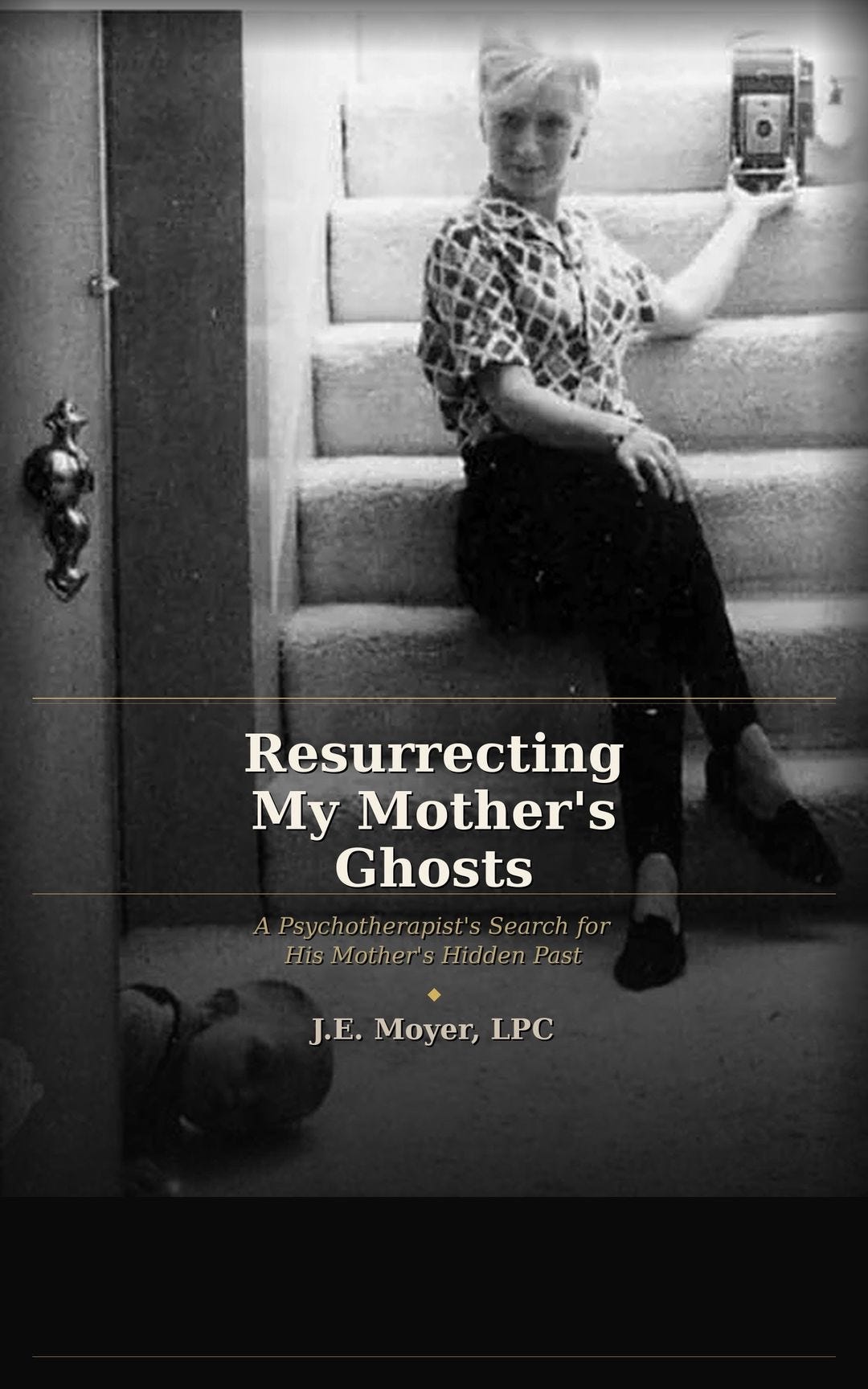
Resurrecting My Mother’s Ghosts is an intriguing exploration of intergenerational trauma, genetic genealogy, and the unspoken secrets that shape family systems. Prompted by the death of his younger brother Russell — whose own unpublished autobiography lends the book a second, unmediated voice — and a serendipitous historical discovery about a Depression-era tradesman painter named John O’Toole, psychotherapist J.E. Moyer embarks on an investigation into the deep silences of his family’s past. Drawing on thirty years of clinical experience, the author approaches his family history not merely as a genealogical puzzle, but as a psychological case study of the “unthought known”—the experiences buried in the unconscious that shape behavior before they are ever consciously recognized.
The memoir challenges the traditional celebration of “resilience” in the face of suffering, arguing instead that what survivors of systemic neglect and trauma truly need is “scaffolding”—the presence of someone willing to witness, name, and help hold the wreckage of their experiences. Moyer uses the concept of “variegated marble” to examine the complex, often contradictory nature of his parents and ancestors, holding their capacity for both cruelty and profound love in the same space. This clinical lens illuminates several haunting narrative threads, beginning with a consumer DNA test that reveals the man who raised him was not his biological father. This discovery opens a parallel investigation into a biological paternal line marked by sudden loss, displacement, and inherited grief.
Through census records and DNA matches, the narrative unearths the hidden histories of the Connelly and O’Toole women in McKeesport and Pittsburgh—women who managed poverty, disappearances, and undisclosed pregnancies with shrewd survival skills and closely guarded secrets. The memoir bears witness to those who were crushed by a lack of psychological scaffolding, particularly Russell, who battled schizoaffective disorder, and Uncle Jack, whose untreated trauma left him an isolated figure mocked by some of the family.
Central to the book’s imagery is the tragic 1931 death of John O’Toole, who was killed by an elevator counterweight while reaching into a dark shaft to retrieve a lost quarter. This serves as a metaphor for the author’s own compulsion to reach into the darkness of his family’s past to retrieve what was lost. Ultimately, the memoir reveals that uncovering the past doesn’t always find perfectly resolved answers, but offers the gentle witnessing and language that previous generations were entirely denied.
Discover the full journey for yourself by purchasing a one month paid subscription to Letters from a Psychotherapist and get a copy of Resurrecting My Mother’s Ghosts at no extra cost.